
Choose the black rutilated quartz seahorse if you want a marine-life subject with needle-like inclusions to examine; choose the amethyst dolphin if a dolphin motif better suits your beach-house decor. These two HighlandCrystal carvings offer a straightforward starting point for a coastal display. Let the animal you enjoy looking at guide your first decision, then consider the stone details and the place where you plan to display it.
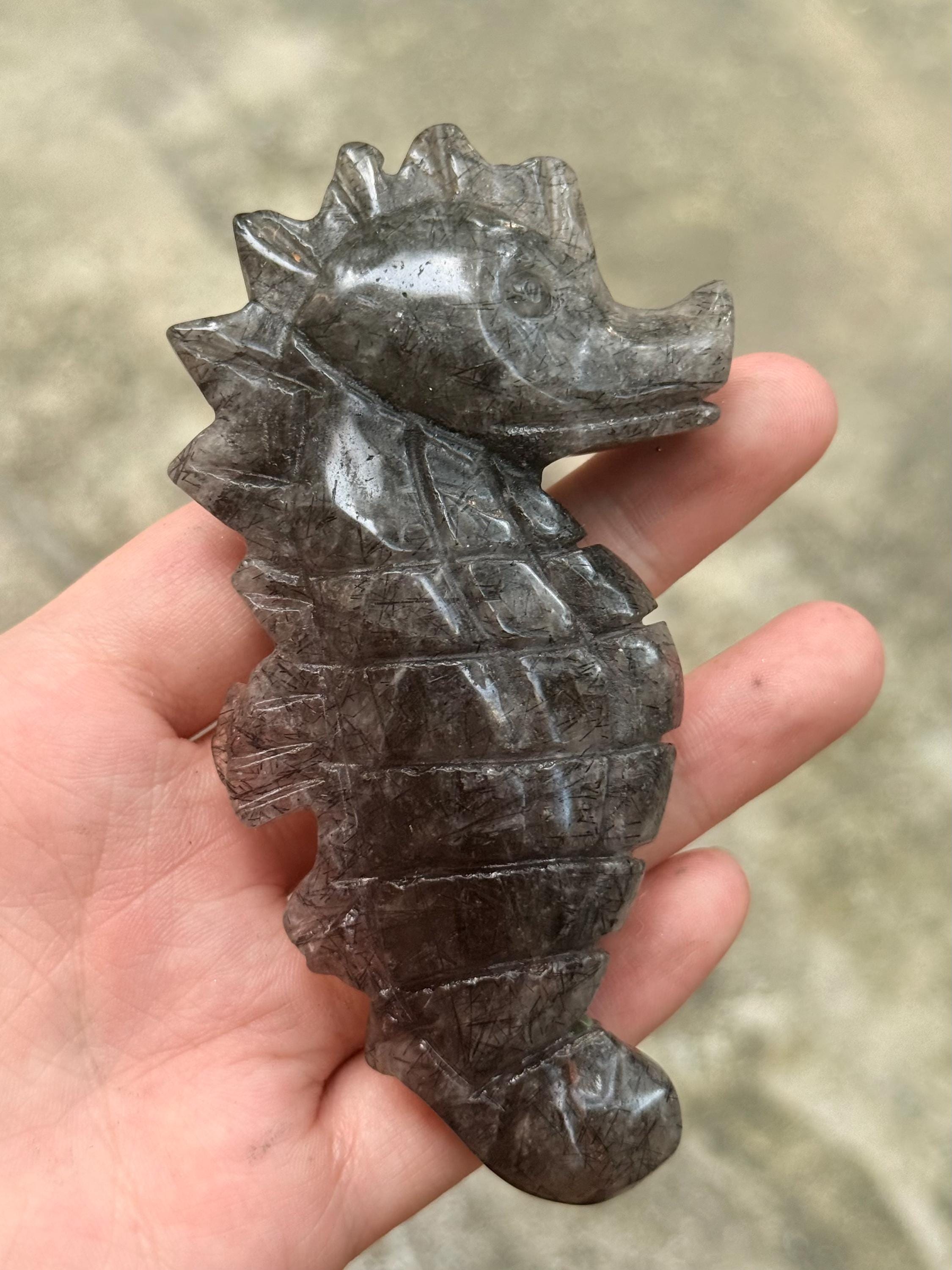
A coastal accent does not need to become a whole-room theme. A marine animal carving can give a bookshelf or personal display area a clear connection to the ocean. The useful buying question is whether you want that connection to stand alone or join a collection you already enjoy.
Compare the two coastal subjects
| Choice | Supplied details | Best reason to consider it |
|---|---|---|
| Black rutilated quartz seahorse | Hand-carved marine-life sculpture described for coastal decor; natural variations may include needle-like inclusions. | You prefer a seahorse subject and want to look closely at internal stone markings. |
| Amethyst dolphin | Hand-carved crystal animal figurine described for beach-house decor; color, translucency, texture, and patterns vary naturally. | You want a dolphin motif to establish the coastal theme. |
Choose the seahorse for a marine-life display
The Black Rutilated Quartz Seahorse Figurine has the clearest marine-life emphasis in its supplied title. It is described as a hand-carved sculpture for coastal decor, making it a relevant choice when the subject itself is your main reason for buying.
Its description also identifies needle-like inclusions among the natural features that may vary. That gives you a second point of interest beyond the animal form. If you enjoy looking at markings inside decorative stone, consider a display position where you can approach the carving and see those details.
For styling, try treating the seahorse as the only animal motif in its immediate area. A quieter surrounding arrangement can help the subject remain easy to notice. This is especially useful if you want a coastal reference within an otherwise mixed room, without repeating ocean imagery across every surface.
Choose the dolphin for a beach-house theme
The Amethyst Dolphin Figurine is explicitly presented as beach-house decor. Its appeal starts with that recognizable animal subject and the listed amethyst material. Choose it when a dolphin is the motif you want to return to each time you look at the display.
The description identifies hand carving and notes natural differences in color, translucency, mineral markings, inclusions, texture, and pattern. It does not establish one uniform appearance across every carving. Make your decision around the dolphin design and your interest in the listed material, while allowing for those individual differences.
In a room that already has a coastal theme, consider giving the dolphin a distinct spot instead of placing it among many competing animal ornaments. If your room has little themed decoration, use it as a single ocean reference. Both approaches keep the purchase tied to a clear display purpose.
Decide whether you need one or both
Start with one carving if you want an uncomplicated focal point. Choose the seahorse for its marine-life subject and listed inclusion details, or the dolphin for its beach-house association. Buying both makes more sense when your aim is a display of different sea animals and you enjoy the contrast between the two subjects.
- Name the display purpose. Decide whether you are adding one coastal accent or building a marine animal grouping.
- Choose the subject first. Ask which animal you would still enjoy if its natural markings differed from the example shown.
- Consider the viewing position. Reserve a place where the carving can be seen without crowding the objects around it.
- Read the option labels carefully. Both listings use lettered options. Do not treat a letter as a description of color or inclusion pattern.
Allow for variation and plan simple care
Both descriptions note that natural stone carvings differ and identify photography under indoor and outdoor light. Use the listed subject, material, and carving method as the foundation of your comparison. Avoid making the entire decision depend on one particular marking or patch of translucency.
The supplied care guidance is similar for both products: handle gently, avoid drops and strong impacts, keep away from prolonged water exposure, harsh chemicals, and direct high heat, and clean with a soft, dry cloth. Choose a dry display location that makes those habits easy. For a coastal arrangement, keep the ocean connection in the subject and styling while following the stone care instructions.