
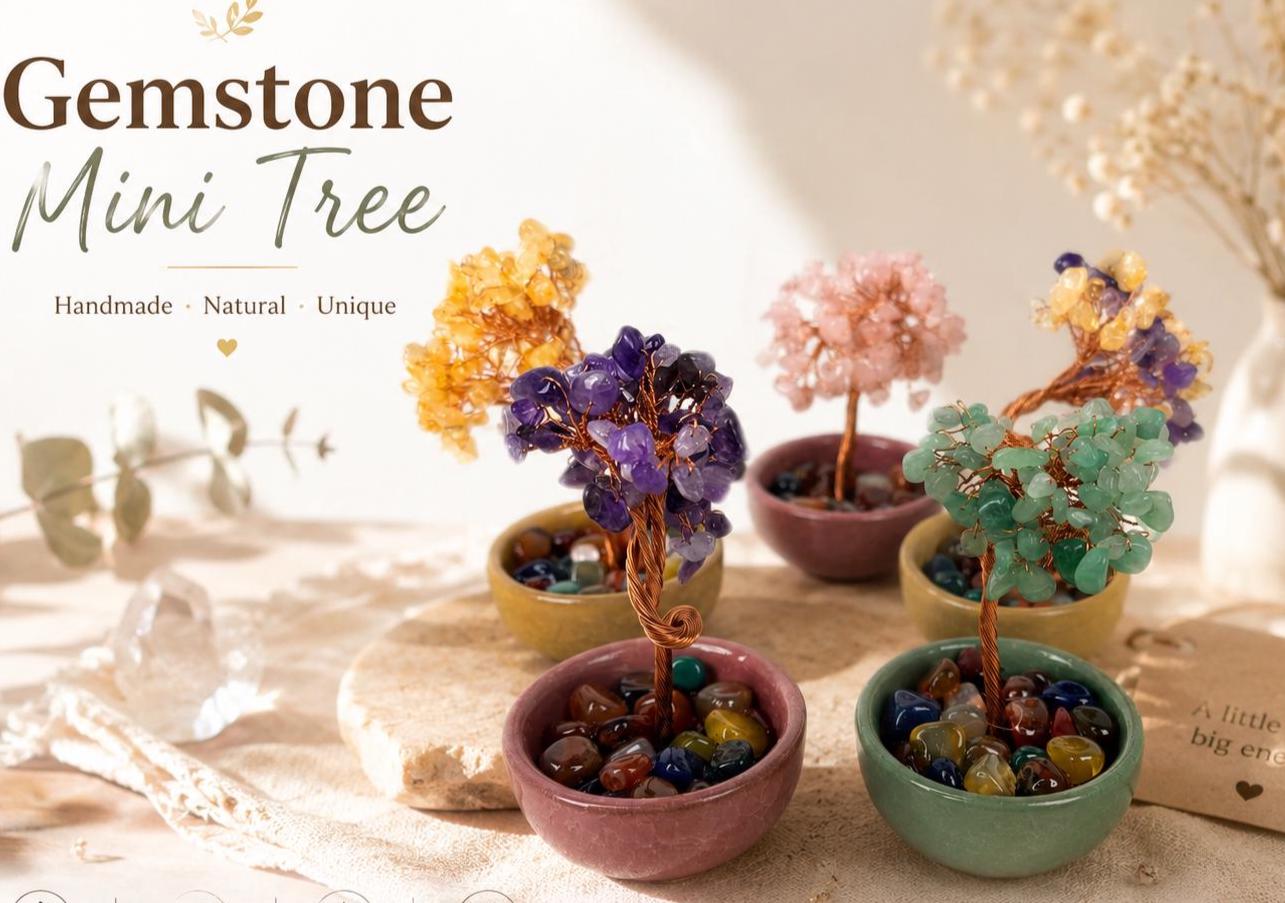
Choose a crystal tree if you like branching shapes and clusters of stone chips. Choose a carved crystal flower if you want the petals and stone pattern to be the main feature. A gemstone rose with a metal stem offers a third option: a flower silhouette with separate stone and metal components. For any of these pieces, compare the construction, actual measurements, and display requirements before choosing a color.
“Crystal flower” describes a design, not one standard material or construction. Here is how to tell three botanical styles apart and choose one for your space.
Three botanical crystal styles at a glance
| Style | What to look for | Before ordering |
|---|---|---|
| Gemstone chip tree | Stone chips arranged on wire branches, with a trunk and base | Check total height, branch spread, and pot dimensions |
| Carved stone flower | Petals shaped into a decorative stone form | Check width, height, and how the base sits |
| Gemstone rose with metal stem | A carved stone blossom combined with a decorative stem | Check total length and whether display support is included |
Choose a crystal tree for a branching silhouette
A tree gives you several visual elements to work with: the chips, wire, trunk, and pot. It can suit a bookshelf or desk where you want an object with an open, branching outline rather than a single carved shape.
HighlandCrystal’s handmade gemstone mini tree is described as crystal chips on copper wire branches and a trunk, set in a ceramic pot with polished stones. That construction matters as much as the gemstone choice. It is an assembled decorative tree; the trunk and branches are not carved from one block of crystal.
Measure the space around the branches as well as the base. A pot may fit between books while the canopy needs more room. Leave enough clearance that you can reach nearby items without brushing against the branches. Do not assume the word “mini” gives you an exact size.
Choose a carved flower when you want the stone to stand out
A flower carving puts the focus on petal shapes, color, and surface detail. It is a useful direction if you prefer a botanical motif without a wire canopy or a long metal stem.
The yellow calcite flower carving is listed with a polished finish and layered petals in golden-yellow or honey-yellow tones. Its description notes variation in color, translucency, and patterns. Use the listing images to understand the style, then confirm whether the piece shown is the exact one you will receive.
For a shelf arrangement, compare the carving’s outline with the objects already there. A flower shape can provide a different focal point beside rectangular books or a simple picture frame. Check its measurements and resting position before deciding that it will fit on a narrow ledge.
Choose a stemmed crystal rose for a floral accent
A stemmed rose combines a carved blossom with other materials. HighlandCrystal’s gemstone rose with a decorative metal stem includes metal leaf details as well as the stone flower.
The stem changes the practical buying questions. Ask how the piece is intended to rest or stand, and whether any holder shown in a photo comes with it. Do not assume a vase or stand is included. The product description identifies the stem as decorative metal; it does not establish a sterling-silver composition.
This style can appeal to someone who already enjoys floral objects. For a gift, match the recipient’s preferred colors and display space rather than choosing solely by a crystal’s symbolic meaning.
Check the selected option and package contents
A group photo can show several colors or designs without representing everything included in one order. Read the selected variant and quantity carefully. If an option uses a number instead of a gemstone name, ask which material and color that number identifies.
Before checkout, confirm the dimensions, number of pieces, included base or support, and whether the photo shows your actual item or a representative example. These details are especially useful when comparing a tree, a carving, and a stemmed flower because they occupy space differently.
Common buying questions
Are crystal trees living plants?
No. The chip-and-wire tree discussed here is a decorative object made with stone, copper wire, and a ceramic pot. It is not a planted bonsai.
Are all crystal flowers made from the same stone?
No. Flower is the shape, while the material depends on the listing and selected option. The yellow flower featured here is listed as calcite; the rose listing offers multiple gemstone options that should be confirmed individually.
Which style should I choose for a small shelf?
Choose by measured fit. Check branch spread for a tree, the resting footprint for a carving, and total length plus support for a stemmed rose. Start with the available space, then choose the shape and color you enjoy most.