
Choose the agate geode owl if you want feather carving combined with an open, sparkling crystal texture. Choose the purple fluorite peacock if the displayed tail feathers are the detail you most want to showcase. For a bookshelf, the useful distinction is what you want to notice first: a bird surrounding a natural geode opening, or a bird whose carved plumage carries the composition.
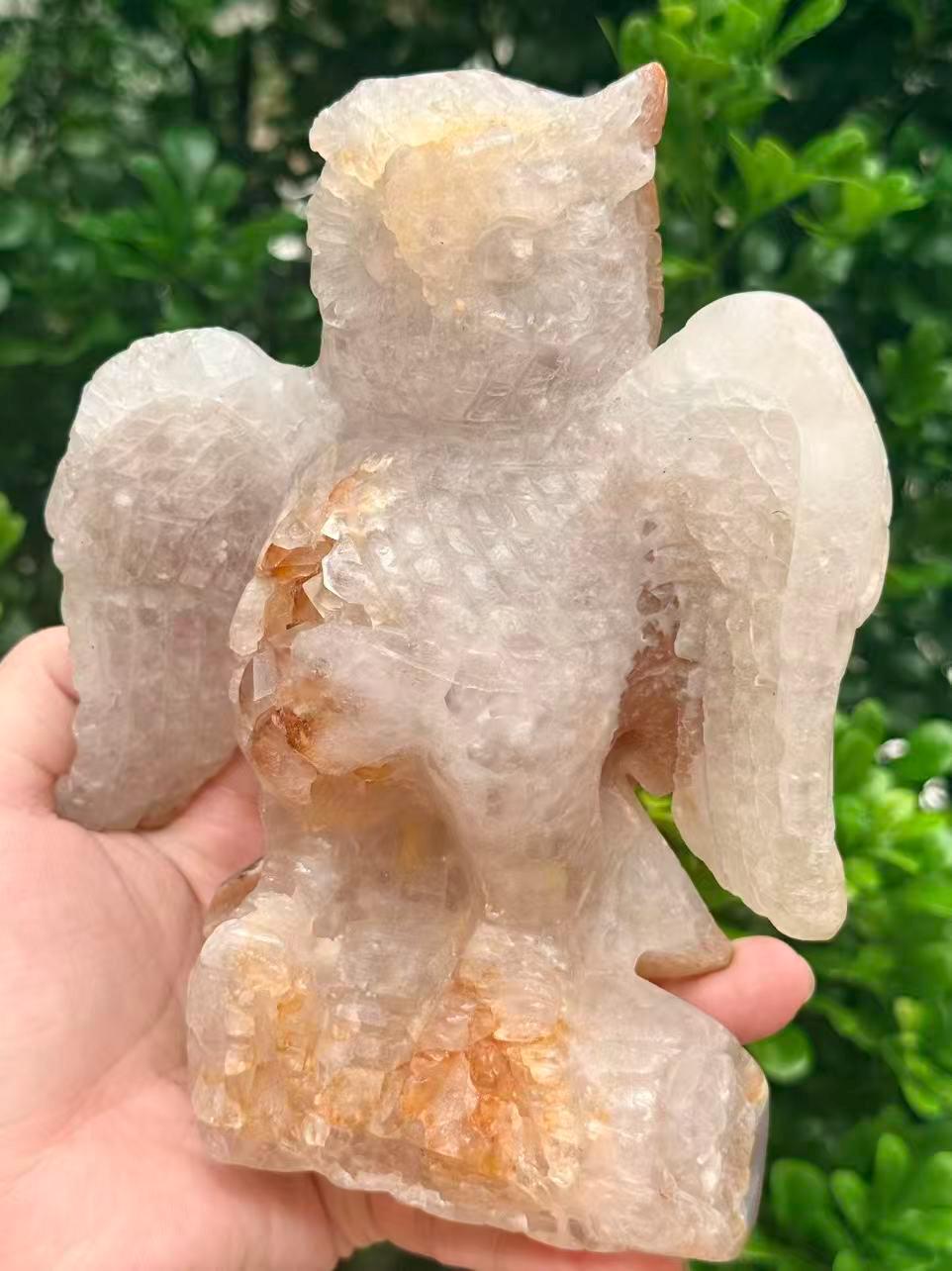
These two HighlandCrystal sculptures offer different ways to add a bird motif to a collection of books and decorative objects. Start with the carving’s main feature, then consider the background and care it needs. That approach gives you a clearer buying decision than choosing by the bird’s name alone.
Compare the features that will anchor your display
| Buying consideration | Agate geode owl | Purple fluorite peacock |
|---|---|---|
| Main sculptural detail | Spread wings and detailed feathers | Peacock displaying its tail feathers |
| Natural stone feature | Druzy opening through the body and base | Purple tones with white and pale green banding |
| Visual emphasis | Carved bird details surrounding crystal pockets | Carved plumage combined with translucent stone |
| Listed cleaning guidance | Soft, dry brush for druzy areas | Gentle cleaning with a soft, dry cloth; no immersion |
Choose the owl for a visible geode opening
The Hand-Carved Geode Agate Owl combines spread wings, detailed feathers, and a natural druzy opening through its body and base. Its description identifies soft translucent stone around sparkling crystal pockets. Those features make it a useful choice when you want both a recognizable animal sculpture and exposed mineral texture in the same display.
Consider how much visual activity already surrounds your intended spot. Against tightly patterned book spines, the feather details and crystal pockets would have several competing elements. As a styling choice, leave some open background around the owl so the relationship between its wings and its central opening is easier to appreciate.
The owl is particularly suited to a buyer who enjoys looking at different kinds of detail within one object. You can appreciate the carved feathers as sculpture and the geode opening as a separate natural feature. Its listing specifically identifies shelf display and crystal collections as intended uses.
Allow for variation in that central feature. The supplied description says geode openings, druzy texture, transparency, and mineral markings vary naturally. Choose the owl because you like this combination of carving and crystal pockets, while leaving room for differences in their appearance.
Choose the peacock for its displayed plumage
The Purple Fluorite Peacock Carving features a hand-carved peacock displaying its tail feathers. The description gives its palette as deep purple with natural white and pale green banding, and notes that the stone reveals translucent qualities when held to the light.
Choose this sculpture if the tail-feather design is the part you would most enjoy seeing among your books. For this display approach, make the plumage the central visual element: avoid placing another detailed ornament directly in front of it, and consider a quieter background that lets the carving remain legible.
Its translucency is an additional material detail to appreciate, but a bookshelf decision should begin with the bird’s form. You should enjoy the peacock in its everyday position without needing to pick it up and hold it to the light. The listed care guidance also calls for avoiding prolonged direct sunlight, so a sunny window should not drive your placement choice.
Check the shelf before choosing
- Identify the feature you want to see. Pick the owl for the interplay of feather carving and a druzy opening. Pick the peacock for its displayed tail feathers.
- Look at the surrounding objects. Temporarily clear your intended display area and decide whether the sculpture will have enough visual separation from nearby books and ornaments.
- Check physical fit separately. Do not assume these sculptures have matching proportions. Confirm the space required before committing to a particular shelf arrangement.
- Consider cleaning access. Leave enough room to lift and handle the carving carefully without bumping neighboring objects.
Let care requirements help settle the choice
The owl’s instructions call for gently cleaning druzy areas with a soft, dry brush and avoiding drops, strong impacts, prolonged water exposure, chemicals, and high heat. The peacock’s instructions specify a soft, dry cloth, protection from sharp impacts and prolonged direct sunlight, and no immersion in water.
If you prefer cloth-based cleaning, the peacock’s listed routine may suit you better. If the exposed crystal pockets are the feature you value most, factor the owl’s gentle brush cleaning into your decision. Buy the carving whose defining detail you want to keep visible and whose care routine fits the way you maintain your display.