
Start a crystal animal collection by choosing a subject you want to keep exploring. Pick a balloon dog if you enjoy playful design, an amethyst lizard if reptiles interest you, or a montebrasite bear if you prefer wildlife subjects. Your first carving should establish a direction that makes the next purchase easier to judge.
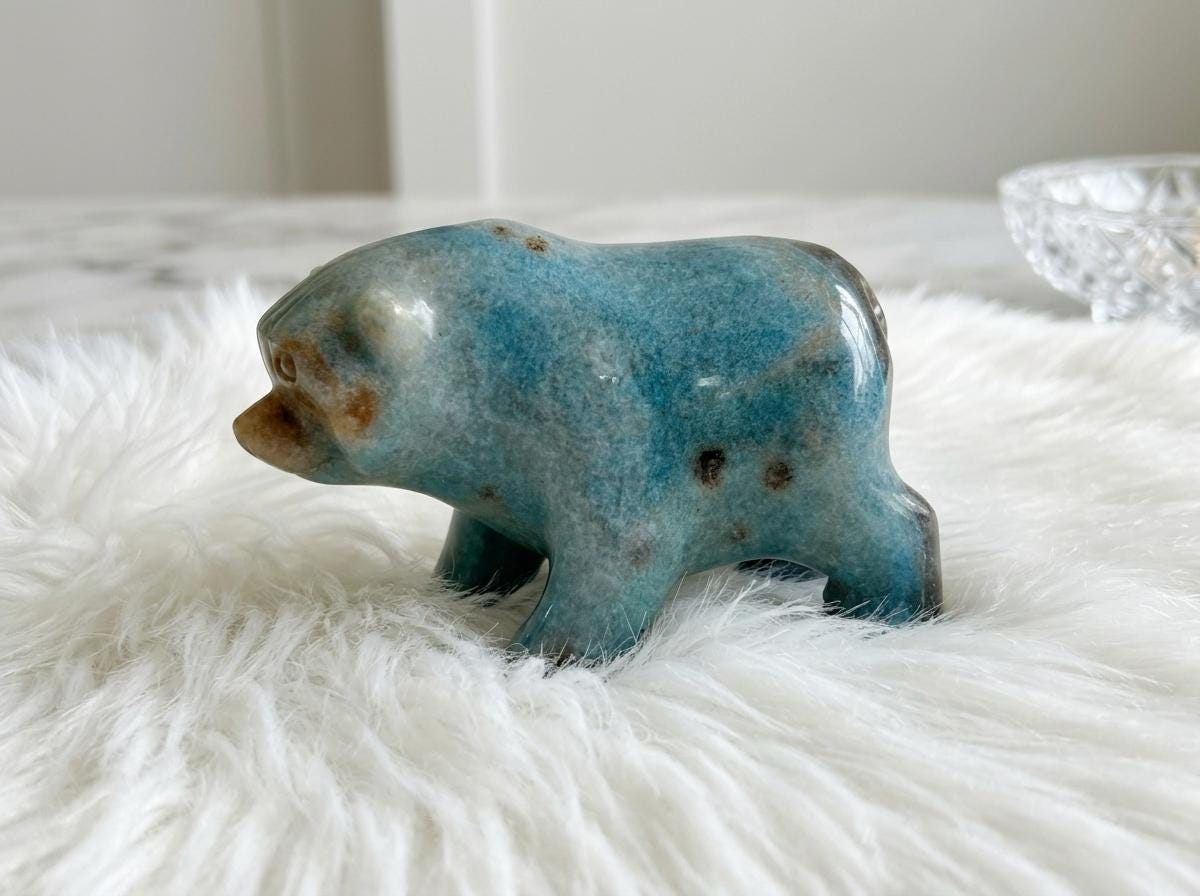
These three HighlandCrystal carvings offer different starting points. Instead of buying several unrelated favorites at once, decide what will connect your collection: animal subject, sculptural style, or a balance between recognizable creatures and imaginative shapes. That connection can leave room for variety while giving each addition a reason to belong.
Compare three starting points
| Carving | Supplied design details | Collection direction |
|---|---|---|
| Mixed Gemstone Balloon Dog | Rounded body, curved legs, balloon-inspired shape | Playful interpretations of familiar animals |
| Amethyst Lizard | Lizard form with lavender and purple tones | Reptiles and other nature subjects |
| Montebrasite Bear | Bear form with blue-green color and brown or bronze inclusions | Wildlife subjects with varied stone details |
Choose the carving that sets your direction
Balloon dog: begin with playful sculpture
The Mixed Gemstone Balloon Dog Carving translates a familiar animal into a balloon-inspired design. Its rounded body and curved legs give it the fun, modern appearance described in the listing. The carving uses machine-assisted shaping followed by hand finishing and polishing.
Choose this as your first piece if the interpretation of an animal matters as much as the animal itself. It provides a useful rule for future purchases: look for designs that simplify or reimagine a familiar creature. A collection built this way can include different animals without requiring every carving to resemble a naturalistic wildlife sculpture.
The description mentions multiple gemstone materials, each with its own color, translucency, markings, and pattern. Treat the balloon form as the main reason to choose this design; avoid planning the whole collection around an assumed material or uniform appearance.
Amethyst lizard: begin with a specific animal interest
The Amethyst Lizard Carving offers a clear starting point for someone interested in reptiles. Its description identifies soft lavender and purple tones, natural translucency, mineral markings, and internal inclusions. It also specifies machine-assisted shaping with careful hand finishing and polishing.
This is the strongest starting choice here when you already know which kind of animal you want to collect. Let that interest guide later additions. Before considering another carving, ask whether it expands the subject in a way you enjoy or simply repeats something you already have.
The listing notes that colors can appear different under different lighting and screen settings. Build your expectations around the lizard design and the described range of stone characteristics, allowing for variation in the final appearance.
Montebrasite bear: begin with wildlife and stone detail
The Natural Montebrasite Bear Carving pairs a bear subject with a blue-green hue and natural brown or bronze inclusions. The description identifies a hand-carved form and a smooth, polished finish that highlights the stone’s matrix and earthy tones.
Choose the bear if you want a wildlife subject while also enjoying variation within the material. It can establish a collection in which each animal brings a different combination of recognizable form and natural markings. The listing identifies desk display and mineral or crystal collections as intended uses.
For later purchases, use two questions: do you like the animal, and do you like how the stone contributes to the sculpture? Requiring both answers to be yes helps make the collection more personal.
Give the second purchase a clear job
You do not need all three carvings to begin. Live with your first choice long enough to notice what you appreciate most about it. Then select a second piece that develops that preference.
- Continue a theme: Follow the lizard or bear with another subject that fits your interest in animals.
- Introduce contrast: Pair the balloon dog’s stylized form with a wildlife subject if you enjoy different interpretations.
- Keep a shared idea: Write a short description of your collection, such as “playful animal sculpture” or “favorite wildlife in stone,” and use it when comparing purchases.
Plan a display you can maintain
Choose a display location before expanding, and leave enough separation to appreciate each animal’s outline. Avoid arranging pieces so closely that one carving hides another. A collection should be easy to view without frequent handling.
Follow each product’s individual care guidance. The lizard listing recommends a soft, dry cloth and avoiding drops, strong impacts, prolonged water exposure, harsh chemicals, and direct high heat. The bear listing also recommends a soft, dry cloth and avoiding prolonged harsh sunlight. Make room for these care needs as you decide where your collection will grow.